When life changes, support stays
Lachie’s life has changed a lot over the past couple of years. He's moved from home in Benalla, to hospital in Melbourne, and then into a new home in Bendigo.
Lachie’s story across Benalla, Melbourne and Bendigo
Different teams have been involved along the way. But the understanding of Lachie has stayed connected: how he communicates, what helps him feel settled and the routines that matter to him.
Quick read
What Lachie needed
After a long hospital stay, Lachie was preparing to move into a new home in Bendigo. His mobility, fatigue and daily routines had changed, and he needed support that could adapt with him.
How support stayed connected
Lachie’s support moved from the Benalla team, to the Melbourne CBD team, then to the Ballarat team. His support plans, routines and communication strategies travelled with him.
How Lachie is settling in
Lachie is now getting to know his new home, local team and allied health supports. His support continues to adapt as his needs become clearer, including work to get the right equipment and routines in place.
Longer read
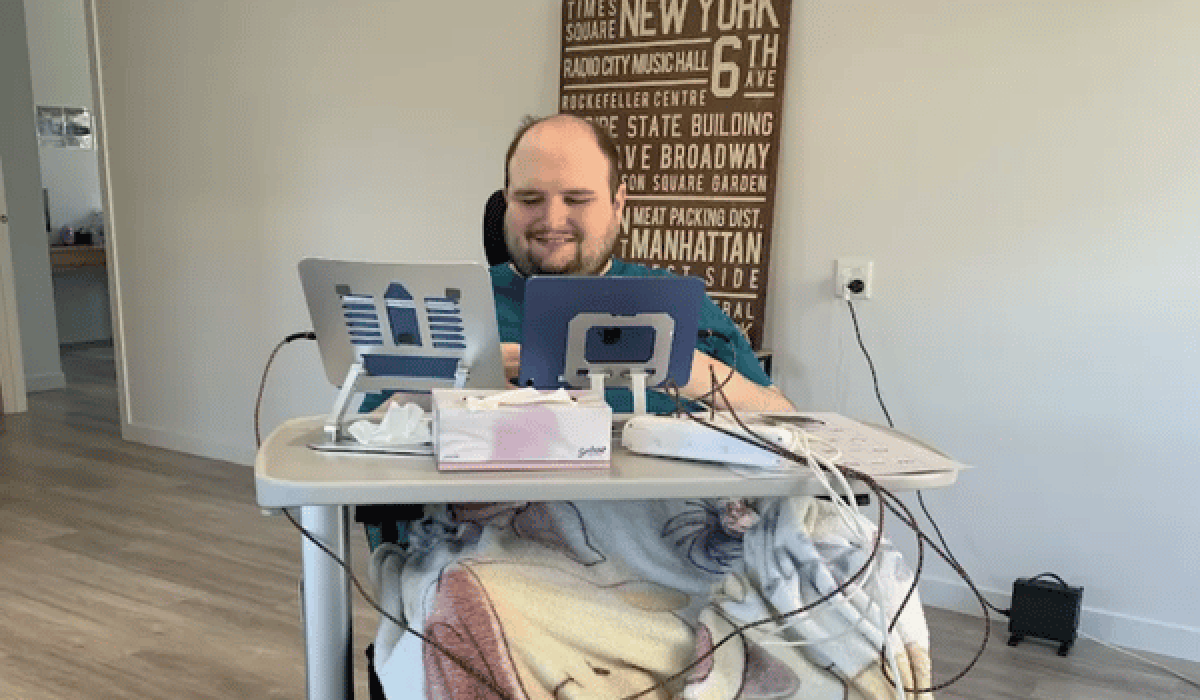
Lachie's in his mid 20s and originally from Benalla. He's autistic and communicates using gestures, vocalisation, body language and the Proloquo AAC app on his iPad.
For people who know Lachie well, there's plenty of communication in those moments. It might be a gesture, a sound, a change in expression or the way he responds when something familiar comes on screen.
Thomas the Tank Engine and Postman Pat are favourites, often watched at half speed. These small routines can be an important part of Lachie’s day.
Lachie also lives with Guillain-Barré syndrome, a neurological condition that can affect the nerves, muscle strength and energy levels.
The past year has involved a lot of change. It has also shown what can happen when support adapts around someone’s life, rather than expecting them to start again each time their circumstances shift.
Starting at home in Benalla
Before hospital, Lachie was living at home with his mum in regional Victoria.
He had previously lived in Supported Independent Living, but it was not the right fit at that time. Returning home gave Lachie more stability, and in 2022 he began receiving 24-hour 1:1 support through InLife.
His Benalla team also supported him with 2:1 community access and behaviour support.
The focus was practical: building routine, supporting Lachie to take part in everyday life, and helping him feel comfortable and understood by the people around him.
Over time, Lachie’s team got to know him well. They understood how he communicates, what can make a day easier or harder, and the small signals that may not be obvious to someone meeting him for the first time.
A move to hospital in Melbourne
In January 2025, Lachie was diagnosed with Guillain–Barré syndrome and admitted to St Vincent’s Rehabilitation Hospital in Melbourne.
His mobility reduced and fatigue became a bigger part of his day. Life moved from familiar home routines to hospital schedules, clinical care and a very different environment.
His mum moved into Lachie’s hospital room for 6 months.
For a period, Lachie’s usual community supports paused. Then, in May 2025, InLife’s Melbourne CBD team resumed 1:1 support with him in hospital.
They worked alongside Lachie, his mum and the clinical team, helping keep familiar communication approaches and routines in place while discharge planning began.
There was a lot to consider. Lachie’s mobility and fatigue had changed. He needed equipment, a new home, local allied health supports and a team that could understand how best to support him day to day.
But the Melbourne team wasn't starting from scratch.
Carrying Lachie’s history forward
By the time Lachie was admitted to hospital, InLife had been supporting him for several years.
His team had built detailed knowledge about the way he communicates, his routines, behaviour support needs and the things that help him feel settled.
Some of this was captured in support plans, routine notes and communication strategies. Some of it sat with the people who had worked closely with Lachie and his mum over time.
The Melbourne CBD team could review Lachie’s records and speak directly with the Benalla team about the practical details that don't always fit neatly into a written plan.
That meant Lachie and his mum didn't need to explain everything again during an already demanding time.
The aim was simple: Lachie’s history needed to travel with him, so hospital didn't become a reset.
Preparing for a new home
After nearly 12 months in hospital, Lachie moved into a new home in Bendigo.
The move involved another major change: a new house, a new town and a new local team. But Lachie arrived with a support history already in place.
Before the move, InLife’s teams in Benalla, Melbourne CBD and Ballarat worked together to prepare for Lachie’s arrival.
This included reviewing Lachie’s communication approaches and routines, planning around mobility and equipment, reinstating behaviour support, setting up local allied health supports and keeping one assistant from Lachie’s Melbourne team involved during the transition.
InLife’s Ballarat team could begin with a clearer understanding of Lachie and the support that had worked for him before.
The focus stayed the same: paying attention to what mattered to Lachie.
Giving everyone time to settle
To help Lachie settle into his new home in Bendigo, his mum stayed overnight in the staff room.
It gave Lachie time to get used to the new environment, while the team continued to learn alongside him and build trust in the new setting.
His mum then gradually returned home to Shepparton, while staying closely involved in Lachie’s life and support.
The team focused on helping Lachie get familiar with the home, the people around him and the routines that would become part of his everyday life.
Finding a rhythm in Bendigo
Lachie is now continuing to settle into life in Bendigo.
A local allied health team is in place, including physiotherapy, dietetics, occupational therapy, behaviour support and GP care. Speech pathology support is also being arranged.
The move has brought good steps forward, but it hasn't been simple. As Lachie’s needs have become clearer, we've continued working with his mum, allied health professionals and housing partners to get the right supports and equipment in place.
That has included equipment that better supports his body, sensory needs and personal care, as well as a wheelchair that can support more time out of bed and, over time, more connection with the community.
Progress is showing up in everyday ways. Lachie's holding utensils again, opening his drink bottle and applying deodorant. He's spending more time in familiar routines, listening to music and enjoying the things that make his day feel like his own.
There's still more ahead. Lachie’s team is still learning with him, his mum remains closely involved and his support will keep adapting as his needs and goals change.
His life has moved across regions, homes and hospital settings. His needs have changed too.
His support has kept adapting, without losing sight of who Lachie is, how he communicates and what helps him feel settled.